

The Rise of the Algorithm: Why AI is Now the Leading Driver of U.S. Job Cuts
Artificial intelligence has been shaping the workplace for years, but March brought a turning point. For the first time, AI was the main reason employers gave for job cuts in the United States. This isn’t just a number—it marks a new stage in how work is changing, as companies now openly say that automation is taking over jobs that people used to do.
Challenger, Gray, and Christmas reported that employers linked over 15,000 layoffs in March to AI. This is a big number on its own, but it also makes up a quarter of all job cuts that month. Just a month before, AI caused only about 10% of layoffs. This quick jump shows that companies are speeding up their use of AI and changing their teams to match.
Understanding the Broader Layoff Landscape
AI led to the most layoffs in March, but it isn’t the top reason for the whole year yet. Right now, AI is the fifth most common reason employers have given for layoffs in 2026. Still, the trend is clear. In 2025, AI caused only a small share of layoffs, but in the first quarter of 2026, that number had already climbed to 13%. The changes are happening quickly and are becoming more obvious in the workforce.
There is a bigger picture that explains these numbers. Employers announced over 60,000 job cuts in March, far more than the month before. But compared to the same month last year, there were far fewer cuts. The first quarter of 2026 had just over 200,000 layoffs, the lowest for any first quarter since 2022. So, the job market isn’t falling apart. Instead, the reasons for layoffs are changing. AI is playing a larger role, even though the overall economy remains fairly steady.
Why the Tech Sector Is Being Hit the Hardest
One surprising finding from the report is that tech companies are seeing some of the highest numbers of AI-related layoffs. This might seem odd, since aren't these companies the ones creating AI systems? But, they are also the ones using AI the most in their own operations, which are changing what kinds of workers they need.
Tech companies announced almost 19,000 layoffs in March and over 50,000 so far this year. That’s a 40% increase from the same time last year, and the highest total since 2023. These companies aren’t having financial trouble. Instead, they are moving their resources around. Many are putting more money into AI development, data systems, and automation tools. As a result, they are cutting or changing jobs that don’t directly support their AI projects.
Andy Challenger, senior vice president at Challenger, Gray and Christmas, said that companies are shifting budgets to AI investments, which is leading to job cuts. He pointed out that this is especially clear in tech, where AI can now do some coding tasks that used to need human developers. Not all programming jobs are going to go away, but the work is definitely changing. Developers who used to write code may now be tasked with overseeing AI systems, reviewing their results, or focusing on higher-level design rather than routine tasks.
Several major companies contributed to the spike in tech layoffs. Dell reported significant cuts in its latest annual filing. Several big companies have added to the rise in tech layoffs. Dell reported major cuts in its latest annual report. Oracle also started reducing staff late in the month, though it hasn’t shared official numbers. Meta kept cutting jobs in its Reality Labs division as it shifted its focus to AI. These actions show a wider trend: companies are putting more effort and resources into AI projects, and they are cutting back in areas that don’t fit with their long-term automation plans.
How AI is Affecting Other Important Industries
Transportation companies are also affected. The transportation industry has announced more than 30,000 job cuts so far this year, an enormous increase of more than 700% compared to the same period last year. This is the highest first-quarter total the sector has ever recorded. The transportation industry is undergoing rapid automation, from AI‑powered logistics systems to autonomous fleet management tools. Many administrative and operational roles are being consolidated or eliminated as companies adopt more efficient AI‑driven processes.
Healthcare has also had a lot of job cuts, with over 23,000 layoffs in the first quarter—a new record for the sector. Clinical jobs are still needed, but many administrative roles are being replaced or are changing as hospitals and healthcare networks use AI for billing, scheduling, claims, and patient intake. This doesn’t mean fewer medical professionals are needed, but it does change how the healthcare industry runs its administrative operations.
The media industry is another industry that is also facing its own problems. News organizations announced over six hundred layoffs in the first quarter, up from last year. AI-generated content, automated reporting, and declining ad revenue are all playing a part in the drop. While AI can’t replace investigative journalism or detailed storytelling, it is being used more for routine content, which means fewer editorial jobs are needed.
Research Confirms the Growing Vulnerability of Knowledge Workers
The growing influence of AI on the job market aligns with recent academic research that suggests AI is having a greater impact on jobs. The Tufts American AI Jobs Risk Index found that computer programmers have a more than 50% chance of being replaced by AI, and web developers are close behind. This shows that AI isn’t just changing low-skill or repetitive jobs—it’s also affecting technical fields that used to seem safe.
This shift questions long-held assumptions about which careers are actually future-proof. For years, workers were told to pursue technical skills to stay ahead of automation. Now, even those fields are being changed by the very tools and resources they helped to create.
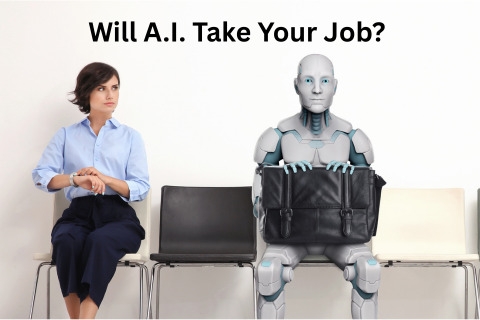
What the Future of Work Looks Like in an AI-Driven Economy
Looking ahead, Challenger believes the tech industry will likely see more layoffs in 2026 as companies continue pouring money into AI. He explained that not only is AI changing the work itself, but it’s also reshaping what is expected from the people doing it. Employees will have to think more broadly, make judgment calls, and learn to guide AI systems as they take on increasingly complex tasks. As of now, none of this means humans are being pushed out entirely. It simply means the skills that matter most will complement and help AI rather than compete with it.
The fact that AI has become a leading driver of job cuts shows how quickly new technology can shake things up before the dust settles. People who stay flexible, pick up new skills, and continue to learn how to work alongside AI will be in a stronger position as the economy continues to evolve. Companies that handle this transition thoughtfully will be the ones that manage to stay efficient without losing sight of the human side of their business.
The workplace is shifting quickly, and AI is at the center of that shift. The real question now is not whether AI will reshape the job market, but how workers and employers will respond to the challenges and opportunities that come with it.
Source: Search Engine Journal, “AI Leads All Reasons for U.S. Job Cuts in March, Report Says”