

Keywords: The Bane of Existence, or Just Good Ol' Fashioned Signposts?
We’ve all been there: you’re 5 tabs into a research session, and you open a new site. You read the paragraph from the meta description, and it just doesn’t make sense. You read the same word over and over, starting to feel like. Those frantic attempts to cram every keyword you can think of into a single sentence feel more like shouting into an empty room than actually helping anyone. What if, instead, those same words could act like friendly trail markers—easy signs that guide readers (and search engines) straight to exactly what they’re looking for? In this guide, we’ll put the keyword‑stuffing myths to bed, show you how to treat keywords as helpful signposts, and give you a practical playbook that turns clicks into genuinely engaged visitors.
Background
Way back in the day, search engines used word matching to decide what the site was about. If your site was "bestplumbersspringfield.com" (I don't have any affiliation with that site; this is just an example) and your homepage had a title like "Best Plumber in Springfield", someone searching for a plumber in Springfield would probably find your site. When marketers figured this out, they repeated the same phrase until their pages rose in the rankings. Search engines responded by making their search criteria more sophisticated, which has led to what we now know as "the algorithm". We've all heard that we need to optimize for "the algorithm" and for the best ways to do so, but the basic point to remember is that search engines now reward relevance and intent. Today's search engines weave context and user purpose into every ranking decision, so a keyword's success now hinges on thoughtful placement rather than sheer repetition. This evolution means that, although keywords still carry weight, they must be used in a way that feels natural to both humans and algorithms alike.
The Myth of Keyword Overload
Repetition can look like a crime. Repetition can look like a crime, and finally, repetition can look like a crime. When the same word or phrase dominates a paragraph, users are more likely to be confused, stop reading, and leave your site. Search engines use this as a sign of low‑quality content and can either penalize the page or, at best, leave its ranking flatlined. You can repeat keywords, but try to spread your target terms naturally across the content (including in headings and sub‑headings!). Try to achieve flowing content that keeps readers hooked; being rewarded by search engines should be a side effect, not the main goal.
In practice, think of your primary keyword as a spice to add to a dish you're preparing. Would you start by dumping all your spices in, or would you sprinkle them where the topic truly needs them? If you stick to using keywords in context to further an existing point, visitors stay longer, and search engines happily signal the page's relevance.
Keyword Strategy: Mapping User Intent
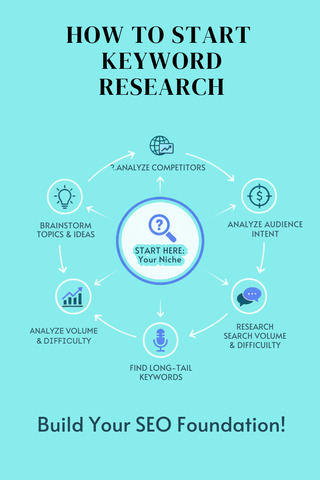
A keyword is only as good as the intent it satisfies. If your users are looking for a specific answer, are they likely to be satisfied if you bury that answer in a step‑by‑step tutorial or a product comparison, or would it be better in an FAQ? The best keywords address that question directly. Start by sorting phrases into three clear categories—informational, navigational, and transactional. Identifying the intent type then informs the tone, length, and call‑to‑action of the paragraph that you're about to write.
When a page meets a user's intent, the chances of higher rankings and better conversions rise dramatically. Intent‑driven keywords help you tailor content that feels conversational rather than sales‑y. Aligning your purpose and language will help to guide your keyword strategy, feeding back into the approach of writing initially for human readers first, rather than trying to look good to search engines.
Natural Language and Semantic Search
Google's BERT and RankBrain engines read sentences just like we do, parsing synonyms, related terms, and contextual clues. Rather than forcing a single keyword into every paragraph, you can write content that naturally covers related concepts. As a quick example, if you're writing for the keyword "keyword research", consider weaving in search intent, SEO tools, and long‑tail phrases to prove that your content is relevant without sounding too robotic, and building terms that are semantically related boosts relevance and protects you from algorithmic penalties.
When you sprinkle synonyms throughout the piece, you create a richer linguistic tapestry that search engines recognize as high quality. Just make sure that your CTA (call to action) doesn't include too many TLAs (three-letter acronyms) that you DWE (don't want to explain). Readers notice the variety, and the content feels less like a lecture and more like a helpful guide. The net result is a better experience for both humans and search engines.
Practical Tips for Keyword Placement
Your primary keyword should appear in the most visible spots: the H1, at least one H2, and early in the first 100 words of each section. These are the places where search engines look first to gauge relevance. Meta descriptions, image alt text, and internal link anchors should also naturally feature the keyword, while keeping the tone conversational and avoiding stuffing.
Short sentences under twenty words and an active voice keep the paragraph moving. Each sub-section of your post should feel like a mini‑story, with each section building towards the main point of the article. If you're able to transition smoothly from one subsection to the next, you can make keywords feel like a natural progression of the topic, rather than a billboard with a very specific piece of jargon stamped on it. If you're writing content to explain a subject rather than just trying to work some keywords into it, the flow stays engaging, and the risk of penalties stays low.
Measuring Keyword Success with Analytics
Without data, you're simply guessing. Google Search Console is the compass that tells you whether your signposts are pointing in the right direction. Keyword monitoring over time is a great idea for optimizing your site, as without measuring things like impressions, clicks, and average position, you won't know what works. If you can record in-depth stats for each keyword and pair that data with heat maps or scroll‑depth reports, you can start to identify what's working and why, for example, if a keyword pulls traffic. Still, conversions lag; tweak the call‑to‑action or the content's depth to better match user intent.
The analysis should happen regularly so you can iterate on the strategy. Each tweak becomes a new set of signposts that better direct your audience to the right page at the right time. A data‑driven approach ensures that your keyword placement continues to serve the people who arrive, not just the search engines.
Expert Insight
“Keyword strategy should feel like a conversation, not a lecture.”
“When you let context guide placement, search engines reward the clarity, and readers find the help they need.” - Maya Chen, digital‑marketing strategist at BrightSpot
Maya’s comments prove that context‑aware keyword optimization helps machine algorithms and human users. Search engines are trying to optimize for the best user experience, and writing quality content (rather than just using your site as a promotional wall) is a key part of that.
Remember that the overall goal is to guide your users towards the correct answer, not to shove it in their faces. Treat keywords as signposts towards useful content - exactly as you would do when speaking directly to people. Search engines increasingly favor content that answers real questions, so a conversational approach not only avoids penalties but also drives engagement and conversions.