

Local SEO Strategy for Small Businesses: How to Show Up When It Actually Counts
Let’s be honest: the "near me" search on Google has completely transformed how people around the world run their small businesses. It used to be that your survival simply depended on a blinking neon “OPEN” sign, a large Yellow Page listing, or just a great spot on a busy street corner. But today, the most important real estate you can own isn’t on a physical street—it’s in the pocket of a random person standing three blocks away. When someone pulls out their phone to find a specific type of business or service, they aren't "just searching." They are ready to buy or visit, and they’re looking for a reason to pick you over the dozens of other available options nearby. Local SEO is what puts you in front of them. It’s not just a technical chore; it’s a modern-day land grab.
Google doesn't look at a local search for a “mechanic” the same way it looks at a broad search for "how car engines work." For the broad stuff, it wants the world’s leading expert. For the local stuff, it wants the person who is closest, most reliable, highly rated, and actually open right now. This local algorithm is a completely different beast entirely. It’s a gatekeeper that wants proof of your physical existence and of your community standing. To win here, you have to move past the generic "internet marketing" advice and start thinking about how your physical address and your digital footprint can work together to scream "relevance" to a search engine.
The Foundation of the Google Business Profile
If your local SEO strategy was a physical shop, your Google Business Profile (GBP) would be the front window. In a lot of ways, this profile is actually more vital than your actual website. Why? Because it’s where the high-intent action happens. It’s where people find your hours, click to call you, or check the map to see if they can walk to you. If your profile is a mess—or worse, unverified—you’re basically keeping the lights off while customers are knocking on the door. You need to be obsessive about the details here. That means picking the exact right categories so Google doesn't accidentally categorize your high-end bistro as a fast-food joint.
But make sure you aren’t treating this profile like a "set it and forget it" yellow pages ad. Rather, it’s better to think of it almost like a social media feed that will actually drive revenue. Posting regular updates about new products, an upcoming holiday sale, or even a quick snap of your team at work tells Google that you are actually active. It shows the lights are on and we are open. Additionally, for the love of your business, it’s important to invest in high-quality, real photos. Dark smartphone pictures of your lobby or a blurry picture of your menu won't cut it anymore. People eat with their eyes, and they absolutely will judge businesses by their thumbnails. High-quality visuals are often the only thing standing between a click to your site and a click to your competitor. And conversely, a visit to you, or a visit to them.
The Vital Importance of NAP Consistency
Consistency sounds pretty boring, but in the world of local search, it’s very important. It’s basically the foundation of everything. We call this foundation NAP: Name, Address, and Phone number. It sounds like basic common sense, but you’d be surprised how many businesses mess this up. They shoot themselves in the foot by having three different versions of their information across the internet. Google is basically a digital detective. It’s constantly cross-referencing all of your data. If your website says "Suite 201," but your Yelp page says "Unit B," and an old directory has your phone number from five years ago, Google will absolutely start to doubt you. And when Google is unsure, it plays it safe and just hides you.
You need to go on a "search and destroy" mission to find every old, dusty mention of your business online. This isn't just about the big sites like Facebook or Bing; it’s about those random local directories, such as your town’s chamber of commerce page, and industry-specific sites. Every single mention of your business needs to be an exact carbon copy. This consistency will build a "trust signal" that tells Google you are an established, legitimate part of the neighborhood. It’s an annoying and tedious afternoon of work, but it’s the difference between being a "trusted local authority" and a "confusing digital ghost."
Cultivating a Reputation Through Customer Feedback
Nowadays, customer reviews are what really matter most. They do a couple of things at once: they convince a human to trust you, and they also tell Google that you’re prominent. Five-star ratings are always great to have, but the gold standard is an actual review that mentions what you did or what you offer. A review that says "Best vegan cupcakes in downtown Austin" is going to be worth ten times more than one review that just says "Great service." But here’s the kicker: Google cares about how fresh your reviews are. A bunch of praise from three years ago won't really save you if your competitor has ten new reviews from last week. You need to keep the feedback loop constantly moving. You can do this by encouraging customers to leave a review.
Just getting a review isn’t enough; it’s also important to respond to all of them. Every single review. When you reply to a happy customer, you’re showing the world that you care. When you reply to a grumpy one—and don’t worry, we all get them—you have a chance to show your integrity. A professional, calm response to a bad review can actually help you win even more customers than a perfect five-star record. People know that mistakes happen, but it’s important to show people that you’re a human who will fix it. By regularly staying active in your review section, you’re not just helping the algorithm; you’re building a brand reputation, one that the community will want to see succeed.
Hyperlocal Content and On-Page Optimization
While your Google profile is the "hook," your website is the "sinker." Most people make the mistake of trying to rank for broad, generic terms. If you’re a local plumber, don't waste your time trying to rank for "plumbing tips." You want to rank for "emergency water heater repair in [Your Neighborhood]." This is called hyperlocal content. You want to write like a local because you are one. Mention the local landmarks, talk about the specific problems homes in your area face (like hard water or old pipes), and name-drop the neighborhoods you serve. This signals to Google that your expertise isn't just theoretical—it’s geographic.
On the technical side, make sure you don't ever hide your location. You should always put your city and state in your title tags and in your headers. Add a simple Google Map on to your contact page to show where you are located. And if you really want to speak Google's language, use something called Local Business Schema. It’s a small bit of code that acts like a "cheat sheet" for search engines, telling them exactly where you are and what you do without any guessing. It helps you show up in the "rich snippets" and voice search results that are becoming more and more common every day. It’s about making it as easy as possible for a computer to understand that you are the perfect answer to a local query.
The Mobile Experience and the Need for Speed
Think about the last time you searched for a local business. Do you remember? You were probably on your phone, possibly in a bit of a hurry, and maybe even a bit frustrated. If your website takes more than three seconds to load, most people are going to bail. On a mobile network, every second feels more like a minute. Google knows this, and it punishes slow sites. A local business website has to be lean and load very fast. That means no massive, uncompressed images and no clunky pop-ups that are impossible to close with a thumb.
Your site also needs to be "thumb-friendly." It sounds funny, but it’s really important. If a customer has to pinch their screen and zoom just to find your phone number, you’ve already lost. Big buttons, a clear "Call Now" link, and an easy navigation menu that actually works on a small screen are 100% non-negotiable. Mobile optimization isn't just a "nice-to-have" option anymore; it’s a survival requirement. If you aren't providing a seamless experience for someone standing outside on a sidewalk looking for your shop, you’re basically handing your business away to the guy across the street.
Building Local Authority Through Community Backlinks
In the big world of SEO, everyone wants a link from a massive site like Forbes. But in local SEO, a link from your local high school’s football team or a community garden blog is a massive win. These are "local backlinks," and they act like a digital handshake. They tell Google that you aren’t just a business located in a city; you are a part of that city. You don't buy these links. You earn them by being a good neighbor. Sponsoring a local charity event or hosting a neighborhood workshop is a great way to get mentioned on local websites that your competitors can’t touch.
An easy way to do this is to reach out to the local "micro-influencers" or neighborhood bloggers. If you’ve got a unique story or business, or you’re doing something that benefits the local community, people will want to write about it. These local mentions create a "moat" around your business. A national chain can spend millions on ads, but they can’t easily replicate the authentic community links that a dedicated small business owner can build over time. It’s about playing to your strengths as a local entity.
The Future of Local Search and Voice Technology
The way people find us is shifting. Instead of typing into a box, they’re asking Siri or Alexa to "find a coffee shop near me that’s open now." These voice searches are much more conversational. People don't use keywords; they ask questions. To stay ahead, your website needs to answer those questions. Adding a "Frequently Asked Questions" page that uses natural language—the way your customers actually talk—is a brilliant move for capturing voice traffic.
Voice search is brutal because there’s usually only one winner. A voice assistant isn't going to read a list of ten options; it’s going to give the "best" one. This makes everything we’ve talked about—the reviews, the location data, the speed—even more critical. You want to be the undisputed answer. By nailing the basics today, you’re future-proofing your business for a world where screens might not even be the primary way people find you.
Sustaining the Momentum of Your Local Presence
Local SEO isn't just a one-time project you can just check off a list. It’s a habit that needs to be ongoing. The internet moves fast, and Google is constantly changing the rules of the game. To stay at the top, you have to keep an eye on your listings, keep asking for those reviews, and keep your content fresh. Check your analytics every once in a while to see exactly how people are finding you. Are they clicking on the map? Are they calling or messaging you directly? Use that data to figure out where is best to spend your energy.
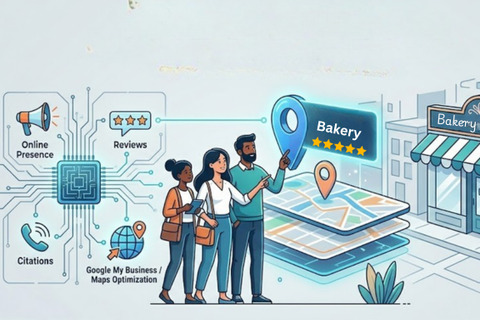
At the end of it all, local SEO is just about building a strong bridge between your online presence and your actual front door. When someone in your community searches for what your business offers, you want to be the very first listing that pops up for them, which then leads to a click, which will then hopefully lead to a visit or purchase. For small businesses, this isn’t just some marketing fluff; it’s the engine that drives foot traffic, builds a great reputation, and lays the foundation for a successful future. Basically, the easier you make it for Google to find you, the easier Google will make it for your neighbors and customers to find you. And in a local economy, that’s what counts the most.
To read about SEO vs Social Media, read here.
To learn about Content Strategy, read these posts here