

The SEO Content Refresh Strategy That Quietly Boosts Rankings Without New Posts
Most people in marketing are obsessed with the new content. We’ve been conditioned to think that if we aren’t hitting the "Publish" button on something fresh every Tuesday, we’re falling behind. But that’s a total myth in 2026. In fact, some of the biggest SEO wins right now aren't coming from new drafts at all. They are coming from the "dusty" corners of your site. This is what we call historical optimization. It’s the quiet strategy of taking an old post and giving it a second life. And honestly? It works better than starting from scratch.
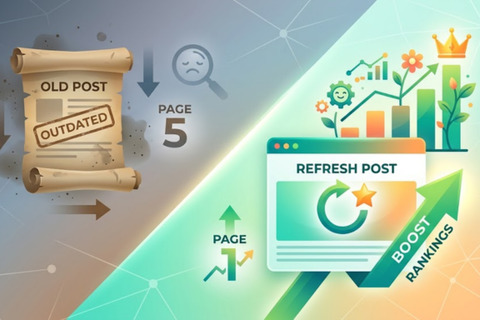
Think of it like this. A brand-new post is always going to be somewhat of a gamble. You’re starting at the bottom with zero data and zero trust from Google. But an old post you’ve already created? That page already has history. It’s already been indexed. It might even have a few backlinks tucked away inside of it. It’s sitting there on page two or three of the search results, just waiting for a reason to move up. By refreshing that content, you aren't fighting for attention from zero; you’re just giving a little nudge to something that’s already halfway there. It really is the highest ROI move you can make.
Finding the Low-Hanging Fruit
You don’t want to just randomly pick old posts to update. That’s a massive time sink. You have to be smart about it. The "gold" is usually found in your "striking distance" keywords. Open up your Search Console and look for pages that are currently ranking between positions 7 and 15. These are the pages Google clearly likes, but doesn’t quite trust enough to put in the top spots yet.
This process is what we call "content decay." You’ll see it in your analytics as a slow, sad slide in traffic over time. A post that maybe used to be a top performer is now barely even getting a sniff, if anything at all. That is your signal. These pages are going to be your best candidates for a refresh. By cleaning them up, you aren’t just looking for new clicks; you’re defending the territory you already worked so hard to win. If you don't update them, a competitor eventually will, and they’ll take that spot right out from under you.
Why a Date Change Isn't Enough
I see this mistake constantly. Someone goes into an old post, changes the year in the title from 2024 to 2026, moves a comma, and hits update. That doesn't work anymore. Google’s AI is way too smart for that kind of "surface-level" tweak. They are looking for something called Information Gain. Essentially, they want to know if the page is actually better than it was before.
To get that "gain," you have to actually add value. Maybe there’s a new study that just came out, or perhaps you’ve realized that your original advice was a bit too complicated. Simplify it. Add a real-world example from your own experience. AI can’t replicate "I tried this and it failed, so do this instead." That kind of human insight is what actually moves the needle in the rankings now. If your refresh doesn't make the page the absolute best resource for that topic, the algorithm is just going to ignore it.
The Reality of Shifting Intent
Search intent isn't ever a "set it and forget it" type of thing. It’s constantly moving. What someone wanted when they searched for "best marketing tools" back in 2022 is totally different from what they want to search for today. Back then, they might have wanted to learn about basic automation. Now? They’re now likely looking for something like AI-integrated platforms that can handle a bunch of jobs at once.
If your old content is still answering yesterday’s questions, you’re going to lose your ranking. Part of a good refresh is a manual "vibe check." Go look at what is currently in the top three spots for your keyword. Are they short checklists? Are they video-heavy? If the top results have changed their format, you need to change yours too. You have to match the current "why" behind the search. If you don't, you're just screaming into a void that doesn't exist anymore.
Breaking the Technical Ceiling
Sometimes, a page is stuck on page two for a boring reason: it’s just too slow. If you haven't touched a post in two or three years, it probably has some technical baggage. Maybe the images are massive, or maybe the layout feels clunky on a modern smartphone. Google’s "Core Web Vitals" are basically the entry fee for the top spots now. If your page takes a long time to load or the text jumps around while it’s loading, you’re going to get penalized.
While you’re fixing the words, fix the technology too. Compress those images. Check your mobile view to make sure it doesn’t look like a complete mess. And please, please, please, for the love of everything, stop using giant walls of text. Use your headers to break things up so that a reader can skim the page and still get the main point of the content. These small technical fixes often act like a "ceiling." Once you clear them out, the page finally has the room it needs to climb.
The Magic of Internal Links
One of the best things about a refresh is that it lets you fix your internal linking. Since you first wrote that old post, you’ve probably published twenty other things that are related to it. But that old post doesn’t know those new posts exist. A refresh is your chance to connect the dots. By linking your old, high-authority pages to your newer stuff, you’re passing on that "SEO juice" across your whole site.
It works both ways, too. Once you’ve updated that old pillar post, go back to your most recent articles and add a link back to it. This tells Google that the page is still relevant and that it’s a central "hub" for your site. This creates a web of authority that makes it much harder for competitors to knock you off your perch. It’s a simple move, but it’s one of the most effective ways to show Google that you really know your stuff.
The ROI of Not Starting Over
Let’s be real here for just a second. Writing a 1,500-word post from scratch is usually a massive pain in the neck. It often takes hours of research, drafting, editing, and proofing. And even then, it might not even rank. But refreshing an old post? You’re already 70% of the way there with the existing content. You’re basically just taking an average "C" grade, upgrading it, fixing it, and turning it into an "A+."
The math is super simple. You can probably refresh four old posts in the time it takes to write one new one. And because those old posts already have a solid foundation, they usually see a traffic jump much faster than a brand-new post would. It’s the ultimate "work smarter, not harder" play. Today, with the sheer amount of content constantly being dumped onto the web every day, the real winners are the ones who take care of what they already have.
The Evergreen Mindset
At the end of the day, a content refresh strategy is about pride in your work. It’s an admission that the internet doesn’t need more "okay" content; it needs better, more accurate content. By constantly circling back to your archives, you’re telling your readers (and Google) that you are a reliable source. You’re saying that your information isn't just a snapshot from three years ago—it’s current.
Take a look at your top performers from last year. If you haven't looked at them in months, they’re probably starting to slip. Don't go start a new draft today. Go find your best old piece of work and ask yourself how you can make it ten times better. Do that once a week, and you’ll see your rankings climb without ever having to come up with a "fresh" idea again. SEO is a long game, and the best way to win it is to make sure your foundation is rock solid.
To read about the difference between traffic and useful traffic, click here
To learn all about AI Content, read these posts here